

Design Puzzling
You can learn a lot about design by having fun
As anyone who has ever changed careers knows, figuring out how to translate your previous skills and experience into your new field is key. But the same can be said for hobbies, diversions, and other outside-of-work projects, and it’s not an idle occupation. Design is a big, messy tangle of goals and approaches and history and ideas, and I guarantee you that there is no subject that is wholly irrelevant to the curious designer. Looking closer at how other pursuits overlap with design always teaches me something new about design (and helps me articulate things I already know), so I consider it a worthwhile way to spend some time. More on some of the other overlaps another time, but today I’m going to talk about puzzles. Nerd alert: I think taking some time with a good puzzle, a fresh notebook, an ample supply of pens & pencils, and a big mug of coffee really is just the best.
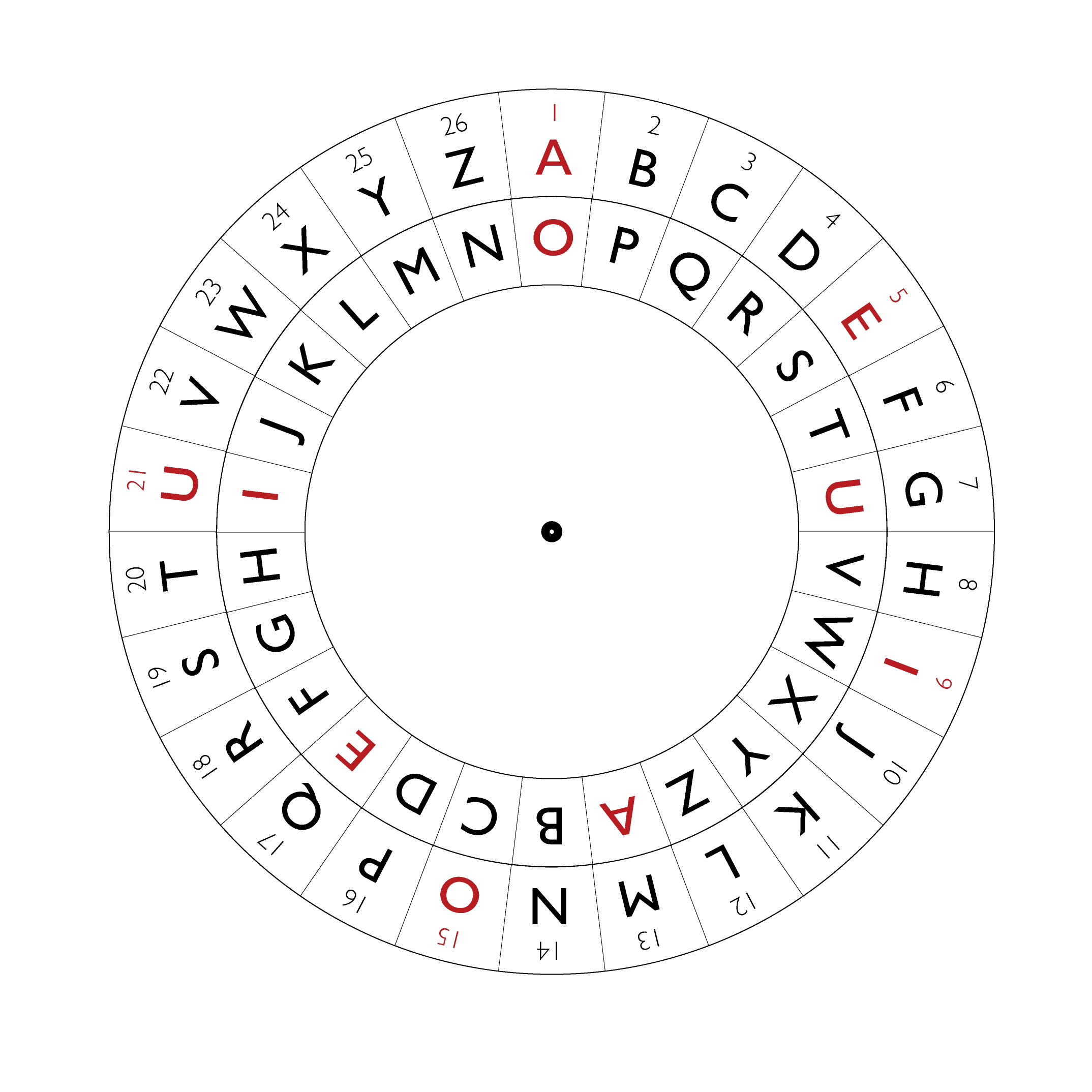
While I’m not a huge fan of crosswords and I only occasionally tackle a jigsaw, I was recently reminded about a particular kind of puzzle I really, really love. They don’t have a good name but are sometimes called puzzle-hunt type puzzles, and one of the defining characteristics is that you’re usually not explicitly told what you need to be solving (though you are given some basic parameters), so the first part of the puzzle is figuring out what it is you need to do. And there’s always the possibility you’re wrong about the goal, so you also have to continually evaluate whether or not you’re on the right path. Then you need to actually solve the thing, which of course involves some work: maybe translating a cypher, uncovering a pattern, or making some kind of connection. When you finally have a solution you still have to evaluate it by returning to the beginning to make sure all the pieces really fit together the way you thought and you haven’t just solved a puzzle of your own invention. And of course that’s the happy path — more often you end up stumbling down a liberal number of dead ends and lengthy detours, get stumped and declare the puzzle unsolvable at least once (sometimes several times), and fend off a rising tide of frustration. Which is all part of the fun!
Sound familiar? Not entirely different from working on a design problem: understanding the rules (aka constraints), gathering information, circling back, putting in the work, and then, at last, celebrating when you find a solution that really, truly works. Something so elegant you can’t believe you didn’t spot it from the moment you started.
Of course with puzzles you usually have handy solutions at the back of the book or online to verify your work and maybe even hints to help you along the way. Plus they’re carefully designed to give you a balance between the freedom to approach the problem however you like and guard rails to keep you from falling off the cliff. They also tend to have signposts to keep you headed in generally the right direction and sometimes helpful visualizations. Big, messy, real-life problems generally don’t have any of that. But when you’re facing a menacing tangle of a problem, it’s absolutely possible to add them in by thinking like a puzzle designer. Ask yourself: if it were a puzzle, what might the hints look like? What would the introductory text (aka flavor text) look like? What kind of visual cues would you use? What guardrails would help keep you on track? Once you’ve got a possible solution, who might help you check your work? Is there a way to balance and contain the frustration with fun, or at least satisfaction?
I’ve been doing a lot of puzzling lately. I’ve found it a balm for my burnt-out soul, a boost to my tired design brain, and just plain fun. Below are some I particularly enjoyed. Maybe some time I’ll even take a stab at designing a puzzle or two myself, but for now I’ll keep working on ones like these.
. . . .
The Master Theorem and The Master Theorem Elite by M
These books combine great storytelling with a pleasing dash of nerdy attitude, consistently helpful hints, and generally extremely satisfying solutions all wrapped up in fairly high quality graphics. My favorite thing about it, though, is it comes closest to my dream scenario: a school for puzzlers. By including a few warm up puzzles and prioritizing both hints and fully explained solutions, even non-nerdy novices should have fun with these books. Will there be a third book? I hope so!
Trial by Cipher and Carte Rouge by Enigma Emporium
These were delightful, immersive games, the first contained in a set of five postcards the second in a deck of playing cards. There are online hints and solution checks. Although I had a few quibbles here and there, overall they were really fun and I’ll definitely be back to try some of their others.
Jungle, Animal, Ocean: Carnovsky 500 Piece Jigsaw Puzzles
If you are in the mood for a jigsaw, these three designed by artist duo Carnovsky are challenging and fun. The mesmerizing overlayed cyan, magenta, and yellow images are a challenge, but one I found satisfying.
If none of the above appeal there are so many others. I’ve also enjoyed Madok’s Lost Treasure from Society of Curiosity, Sherlock Holmes, Consulting Detective, The Puzzler by A.J. Jacobs, The Sherlock Holmes escape books from Ammonite Press, Bletchley Park Brainteasers by Sinclair McKay, wooden puzzles from Professor Puzzle, and many more.